Retro gaming has never been more popular — or more accessible. Pre-owned consoles are widely available, prices for most platforms are still reasonable, and the libraries are enormous. But if you've never bought pre-owned hardware before, it can feel daunting. What should you look for? What are the common failure points? Which platforms offer the best value right now?
This guide covers everything you need to know to buy a retro console with confidence — whether you're picking up your first retro machine or adding to an existing collection.
Before You Buy: What to Check
Pre-owned electronics require a bit more due diligence than new hardware. Here's what to look for regardless of which platform you're buying:
Physical Condition
Retro consoles are typically 20–40 years old. Some yellowing of the plastic is normal and purely cosmetic — it doesn't affect function. What you want to avoid is:
- Cracked or broken casing — can expose internal components and suggests the console has been dropped
- Missing port covers or broken flaps — cosmetic but worth noting
- Corrosion around ports — can indicate liquid damage or poor storage
- Heavily scratched disc trays — may indicate rough handling
What Should Be Included
A complete console bundle should include: the console itself, a power supply (correct for UK voltage — 240V), an AV cable, and at least one controller. Memory cards are separate for PS1/PS2. Always check what's included before buying — a "console only" listing without a power supply is useless until you source one.
Some older consoles (particularly Japanese imports) use 110V power supplies. Using a 110V PSU in a UK 240V socket will destroy the console. Always verify the voltage rating on the power brick before plugging in. UK-spec consoles use 240V supplies.
Testing Before You Buy (in person)
If you're buying in person, always ask to see the console powered on and running a game. Specifically check:
- Does it boot cleanly without errors?
- Does it read a disc or cartridge without excessive loading time?
- Is the picture stable and clear?
- Do all controller buttons respond correctly?
- For disc-based systems: does the disc tray open and close smoothly?
Platform-by-Platform Guide
Here's our honest assessment of the major retro platforms — what's great about them, what to watch out for, and whether they represent good value right now.
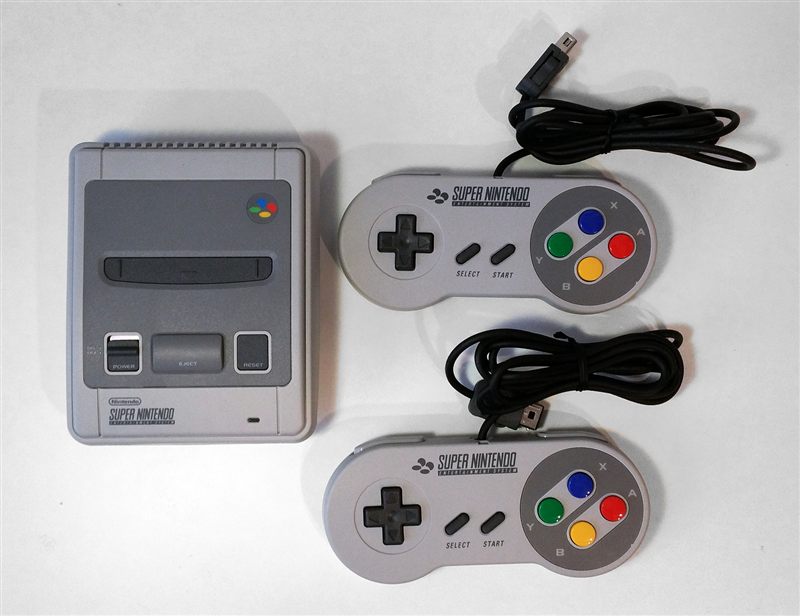
Super Nintendo (SNES)
Highly RecommendedThe SNES is arguably the greatest games console ever made. The library includes Super Mario World, The Legend of Zelda: A Link to the Past, Super Metroid, Chrono Trigger, Final Fantasy VI, and dozens more all-time classics. The hardware is extremely reliable — cartridge-based systems have no moving parts to fail, and the SNES is built like a tank.
Common issues: Capacitor degradation on some PAL units can cause audio issues. The cartridge slot can get dirty — a cleaning kit sorts this. Controller ports occasionally need reseating.
- Incredible game library
- Very reliable hardware
- No moving parts
- Controllers still feel great
- Good games are getting expensive
- RF-only on some units (needs adapter)
- No HDMI without modification
What to pay: Console + controller + cables: £40–80. Complete game bundles command a premium.
Sega Mega Drive
Excellent ValueThe SNES's great rival and the home of Sonic, Streets of Rage, Mortal Kombat, and a massive library of sports and action games. The Mega Drive is extremely common, very affordable, and the hardware is bulletproof. The Model 1 (with the "High Definition Graphics" badge) is the most sought-after, but the Model 2 is cheaper and equally functional.
Common issues: Very few. The Mega Drive is one of the most reliable consoles ever made. Cartridge pins can oxidise — clean with isopropyl alcohol.
- Extremely affordable
- Massive, cheap game library
- Rock-solid reliability
- Great for multiplayer
- No HDMI without modification
- Some games are region-locked
- Controllers can feel stiff with age
What to pay: Console + controller + cables: £25–55. One of the best value retro consoles available.
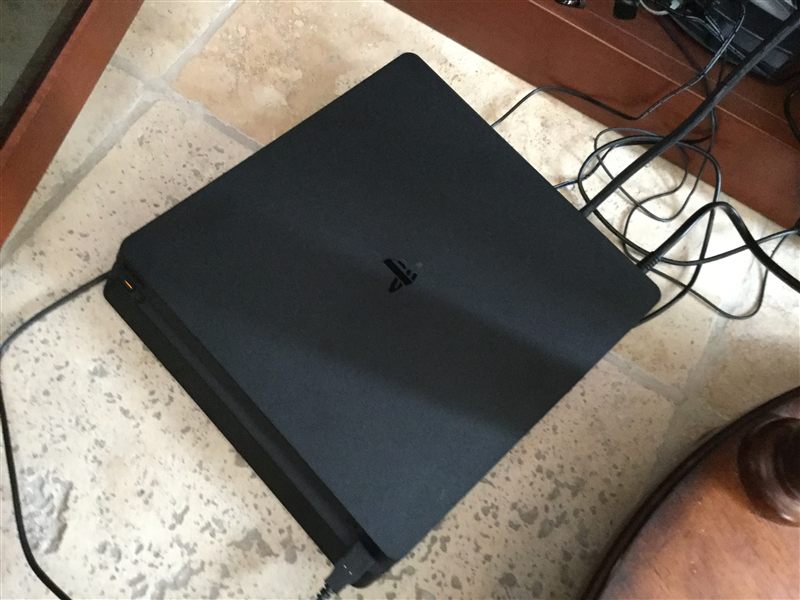
PlayStation 1 (PS1)
Highly RecommendedThe original PlayStation remains one of the most important consoles in history. The library is enormous and diverse — JRPGs, survival horror, platformers, racing games, fighting games — and prices for most titles are still very accessible. The hardware is generally reliable but has one well-known weakness: the laser mechanism.
Common issues: The CD laser degrades over time. The classic fix is the "disc tilt" trick — propping the console on its side or upside down to help the laser read discs. A laser replacement is a straightforward repair if you're comfortable with a screwdriver. The SCPH-1002 (original model) is the most prone to laser issues; later models (SCPH-5502, 7502, 9002) are more reliable.
- Iconic game library
- Affordable hardware and games
- Huge variety of titles
- Great entry point for collecting
- Laser degradation is common
- Composite video only (no RGB without mod)
- Memory cards sold separately
What to pay: Console + controller + cables: £30–65. Avoid very cheap listings — they often have laser issues.
Nintendo 64 (N64)
Good — Buy CarefullyThe N64 is home to some of the greatest games ever made — Ocarina of Time, Majora's Mask, GoldenEye, Mario 64, Banjo-Kazooie. The hardware is generally reliable, but the game library is expensive. N64 cartridges hold their value extremely well, and complete-in-box copies of popular titles can cost hundreds of pounds.
Common issues: The cartridge slot can develop poor contact — cleaning with isopropyl alcohol usually fixes this. The expansion pak slot cover is often missing (cosmetic only). Controllers suffer from notorious analogue stick wear — expect worn sticks on any used controller.
- Legendary game library
- Very reliable hardware
- 4-player multiplayer built in
- Iconic design
- Games are expensive
- Controllers wear badly
- Composite video only
- Small PAL library vs NTSC
What to pay: Console + controller + cables: £45–90. Budget extra for replacement controllers.
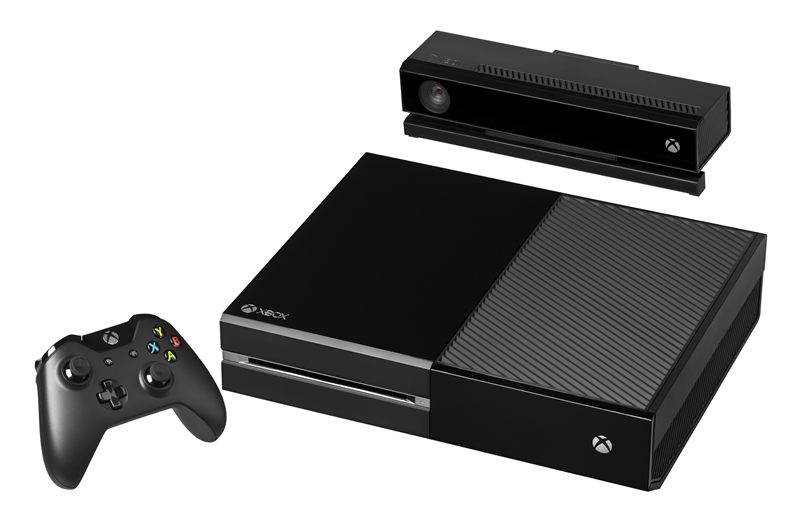
Xbox 360
Best Value Right NowThe Xbox 360 represents extraordinary value in 2025. The hardware is cheap, the game library is enormous, and prices for most titles are still very low. The 360 library includes Halo 3, Gears of War, Forza Motorsport, Red Dead Redemption, Mass Effect, and hundreds of other excellent games — many of which can be found for under £5.
Common issues: Early models (Xenon, Zephyr) are prone to the infamous "Red Ring of Death" (RROD) caused by thermal issues. Avoid these. The Slim (2010) and E (2013) models are much more reliable. The disc drive can fail on heavily used units — check it reads discs cleanly before buying.
- Enormous, cheap game library
- HDMI output (Slim/E models)
- Great controller
- Excellent value
- Early models unreliable (RROD)
- Disc drive can fail
- Online services discontinued
- Some games require HDD
What to pay: Slim console + controller + cables: £25–50. Avoid original "fat" models unless they've been repaired.
Getting the Best Picture Quality
Most retro consoles were designed for CRT televisions. On a modern flat-screen TV, the picture can look soft, blurry, or have input lag. Here are your options:
- Composite video (yellow cable): The most common connection. Works on most modern TVs via AV input, but picture quality is poor — soft and blurry.
- SCART (RGB): Significantly better picture quality. Requires a SCART-to-HDMI converter (£15–30). Available for PS1, SNES, Mega Drive, N64.
- HDMI modification: The best option for purists. Boards like the HDMI mod for N64 or PS1Digital give a clean digital signal. Requires soldering or professional installation.
- Upscalers: Devices like the RetroTINK 2X or OSSC convert analogue signals to HDMI with minimal lag. Excellent for serious retro gaming setups.
For most people, a SCART cable + cheap SCART-to-HDMI converter is the sweet spot. It's inexpensive, easy to set up, and gives a noticeably better picture than composite. Browse our console stock →
Summary: Which Console Should You Buy?
Here's our quick-reference guide based on your priorities:
- Best overall library: Super Nintendo or PlayStation 1
- Best value right now: Xbox 360 Slim or Mega Drive
- Best for multiplayer: Nintendo 64 or Mega Drive
- Best for collectors: SNES or N64 (higher value ceiling)
- Best for beginners: Mega Drive or Xbox 360 (cheap hardware, cheap games)
- Most reliable hardware: Mega Drive or SNES
Whatever you choose, buy from a seller who tests their hardware and describes condition honestly. Browse our tested console stock here.